
Resources
Miscellaneous Circuits (Part Three)
From the Technology Enhancement Programme (TEP), these circuits allow students to build a range of devices. Each circuit has a full circuit diagram, component list and explanation of how the circuit works. In this section, the circuits cover a range of miscellaneous...
Miscellaneous Circuits (Part Two)
From the Technology Enhancement Programme (TEP), these circuits allow students to build a range of devices. Each circuit has a full circuit diagram, component list and explanation of how the circuit works. In this section, the circuits cover a range of miscellaneous...
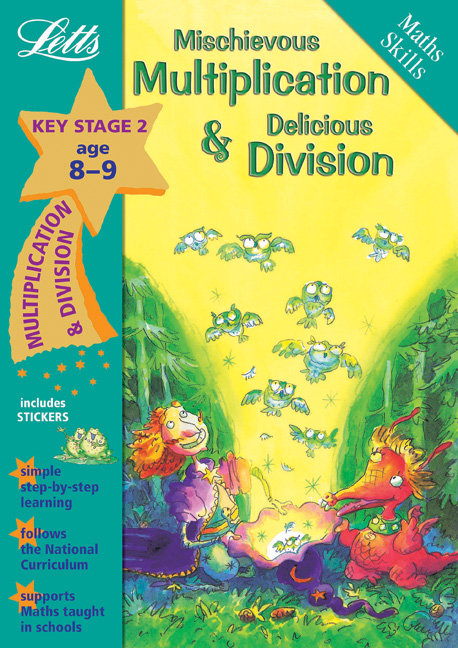
A fun, interactive activity book based around the popular theme of magic to engage and motivate young learners. This book helps children to practise their multiplication and division skills, reinforcing what has been...
Misconceptions about falling objects
This video explains why objects of different masses fall at the same rate towards the ground.
A heavy medicine ball is dropped at the same time and from the same height as a lighter basket ball. They both hit the ground at the same time.
Although the medicine ball has a greater force on it, its...
Misconceptions about heat
This video shows the types of common misconceptions people have about heat. A book and a metal object, that are the same temperature, are held by people. They all say the metal object is colder. Using an IR thermometer, it is proved that a cake and its metal container are the same temperature as they are removed...
Misconceptions about temperature
This video considers the misconceptions people have about heat. Most people believe that something that feels hotter to the hand must be at a higher temperature. However, this is not always the case. We do not feel temperature, rather we feel the rate at which heat is conducted towards or away from our hands. Two...
Misconceptions about the universe
This video introduces the Hubble sphere and how the rate of expansion of space can be used to explain how we see very distant objects that are travelling faster than light. The limitation to the observable universe is the particle horizon (where the time is too great for light to have reached the Hubble horizon)....
Misconceptions in Key Stage Three Science Training Materials
These Key Stage Three National Strategy training materials from the Department for Education are designed to run a session with science teachers to help them: *identify commonly held misconceptions (alternative conceptions, alternative frameworks) *establish the importance of models and analogies *identify...
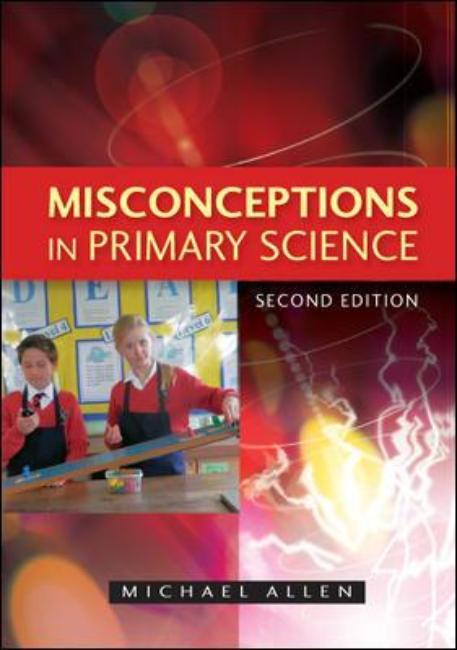
This book offers coverage of the most common scientific misconceptions that you may come across and, in addition to background theoretical and research material, offers appropriate teaching strategies to help you...
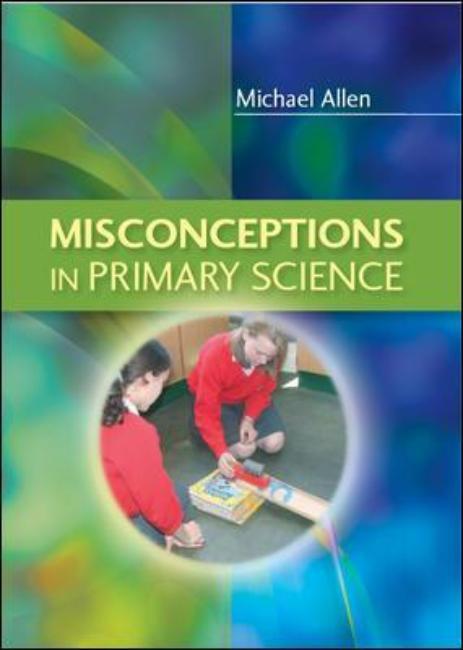
This essential book offers friendly support and practical advice for dealing with the common misconceptions encountered in the primary science classroom. Most pupils will arrive at the science lesson with previously...