
Resources
How Stuff Changes
From Teachers TV, and part of the Science Tube series, this video contains five short clips that explore the non-reversible changes that lead to the formation of new materials. The video clips cover:
Fire! Fire! The...
How Tall Are You in Leaves?
In this resource, aimed at primary level, children take measurements of their height using leaves. Using different sized leaves to measure different children, and then comparing their actual height with that measured in leaves, will help them to see the importance of using standard measurements.
Produced by...
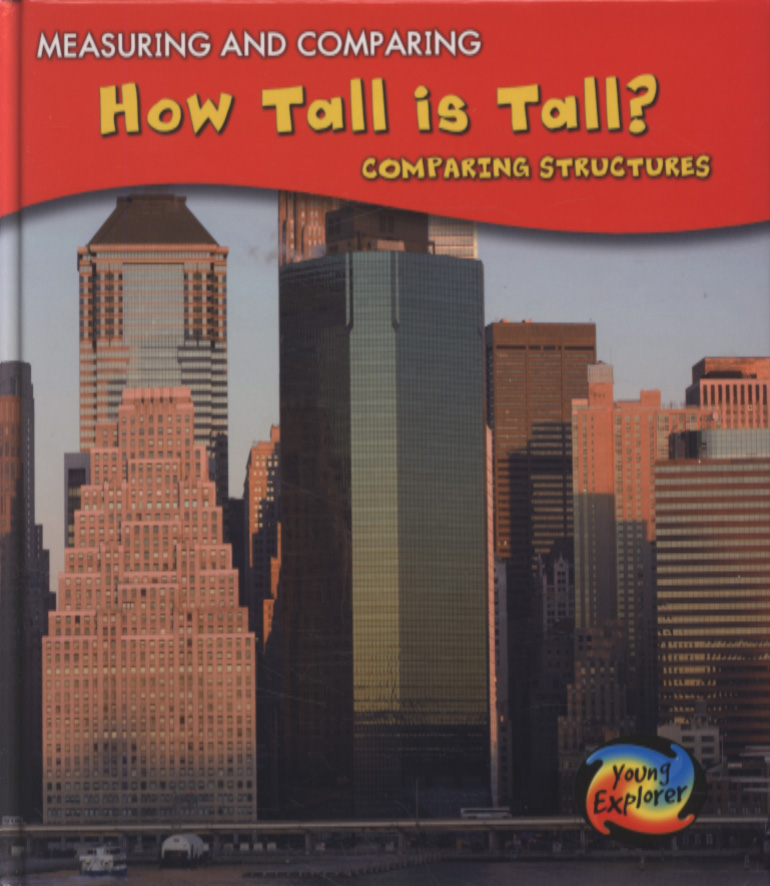
This series uses child friendly points of reference to explore scientific and mathematical measurements.
The books present numerical data in a visual way that makes it easier to comprehend.
Each book...
How technology affects us clasroom debate
Using the presentation as stimulus material, this activity asks students to consider products in terms of their benefits to society and to justify their point of view. This activity allows students to explore social, ethical, economic and health issues relating to...
How the Earth Works
This text, produced by the Geological Society, investigates igneous, metamorphic and sedimentary rocks, the rock cycle, erosion and weathering. The book contains a series of classroom activities for earth science at Key Stage Three. Each unit provides preparatory information for the teacher, information sheets for...
This item is one of over 25,000 physical resources available from the Resources Collection. The Archive Collection covers over 50 years of curriculum development in the STEM subjects. The Contemporary Collection includes all the latest publications from UK educational publishers.
How the Human Genome Was Sequenced
From the Wellcome Trust Sanger Institute, this resource introduces the Human Genome Project (HGP).
A short animation gives:
* an introduction to DNA and genomes;
* an overview of which countries were involved in the international Human Genome Project;
* a description of the processes,...
How the Leopard Gets Its Spots
The animal kingdom contains an abundance of exquisite natural patterns from the stripes of an angelfish to the spots of a leopard. But how do these arise during early development? This Catalyst article looks at Turing mechanisms as a way of explaining how patterns develop as an animal grows.
In 1952, Alan...
How the Mushroom Got its Spots
This booklet has been produced by the Biotechnology and Biological Science Research Council (BBSRC) and the British Mycological Society. It is a guide to fungi and includes information on mushrooms, toadstools, moulds and other fungi.There are guidance notes as well as...
This item is one of over 25,000 physical resources available from the Resources Collection. The Archive Collection covers over 50 years of curriculum development in the STEM subjects. The Contemporary Collection includes all the latest publications from UK educational publishers.