
Resources
Day Out
In this Bowland assessment task, students plan a day out for thirty pupils based upon data given. Students are provided with three places from which to choose. Information about the distance from the school and the entrance cost of each activity is given, along with the results of a survey in which each of the...
Day out: school trip planning
This task looks at planning a school trip. Information is given about three places to visit, including the cost and distance from school. A class vote takes place with students listing their first and second choice of which place they would like to visit. Additional information gives the cost per mile of hiring a...
Day Six of Exclusion: The Extent and Quality of Provision for Pupils
This report from Ofsted looks at the provision for excluded pupils. Schools and local authorities are required to provide full-time and suitable education for pupils from day six of fixed-period and permanent exclusions. This survey evaluates the extent to which a sample of schools and local authorities were...

One of a series of titles dealing with basic scientific concepts and aimed at reluctant readers aged 9-11.
Day, night, and the seasons
In this short animation Paxi, the ESA mascot, explores the Earth's orbit to tell us about day, night and the seasons. Paxi goes on holiday and tells us about how the Sun is a star and gives us light and heat. He flies into space and looks down at the Earth's spinning axis and its orbit around the sun. He explains...
Days and seasons
These diagnostic questions and response activities (contained in the zip file) support students in being able to:
- Describe the apparent movement of the Sun during the day.
- Describe the effect of seasons on temperature, day length and the apparent movement of the Sun.
- Explain why days...
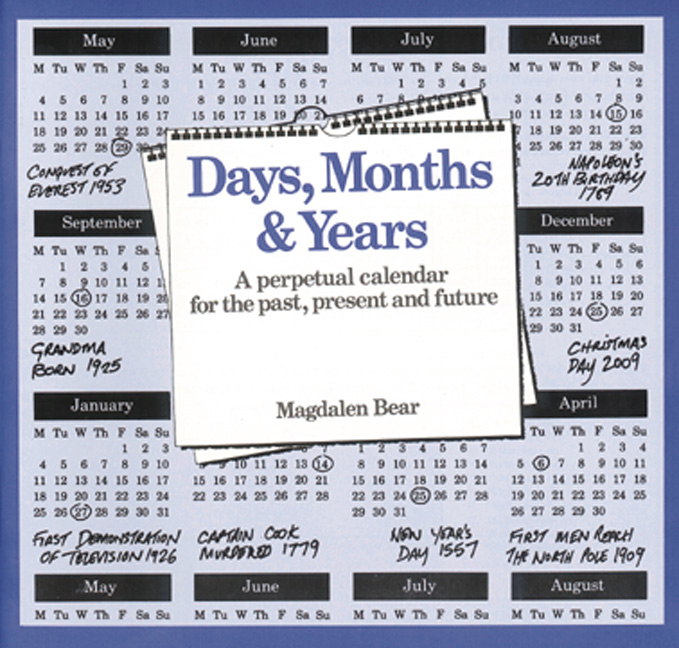
This year, next year, sometime, ever. This title gives the calendar for every year. Looking back into the past, it can be used to find out on what day of the week any event took place, or on what day anyone was born...
Daytime astronomy
An activity where students use telescopes or binoculars to project an image of the sun onto a screen. Using a microwave oven, they then calculate the speed of light.
Daytime Moon Viewing
This resource, from the Royal Observatory Greenwich, uses daytime viewing of the Moon to reinforce ideas learned in the classroom about light, shadow and the Moon itself. Advice is given on the best times to view the Moon, and the compulsory and optional equipment needed. By viewing the Moon during the day,...