
Resources
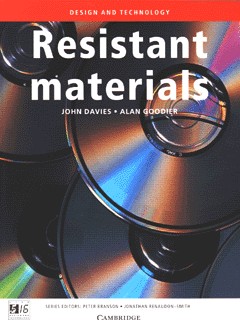
Design and Technology: Resistant Materials relates the work that students in key stage 4 aged 14-16 will be involved in to industrial practices. There are six case studies, each of which looks at the way a company...
This item is one of over 25,000 physical resources available from the Resources Collection. The Archive Collection covers over 50 years of curriculum development in the STEM subjects. The Contemporary Collection includes all the latest publications from UK educational publishers.
This item is one of over 25,000 physical resources available from the Resources Collection. The Archive Collection covers over 50 years of curriculum development in the STEM subjects. The Contemporary Collection includes the latest publications from UK educational publishers.
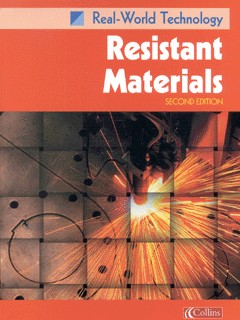
Updated for the new GCSEs, Collins Real-World Technology provides invaluable insight into industrial practices. With knowledge, skills and processes juxtaposed with their application in the working lives of designers...
Resistivity of metal wires
This builds on from GCSE work on resistance to investigate the resistivity of a series of metals in the form of wires. This is common and simple investigation where students can look at developing their measuring skills, especially with calculating the area of the wires.
Resistor Production
This engineering resource, produced by Mathematics in Education and Industry (MEI) for the Royal Academy of Engineering, asks the question: how can production outcome data from a manufacturing process be analysed to optimise the process? Students consider the outputs of resistors to see the outcomes form a normal...
Resistors in series and parallel
Two videos for investigating resistance in series and parallel circuits. The first video demonstrates the experiment to measure voltage and current, and the second calculates the resistance values. This is a required practical for students to be able to understand and carry out for GCSE Combined Science and Physics...
Resolving vectors
This video explains how horizontal (x) and vertical (y) components of a vector (resultant) can be obtained by constructing a right-angled triangle and using trigonometry. Two examples are given.
1. A plane flying N-E (60⁰ from north) at 50m/s.
The horizontal component = 50cos30⁰
The vertical...
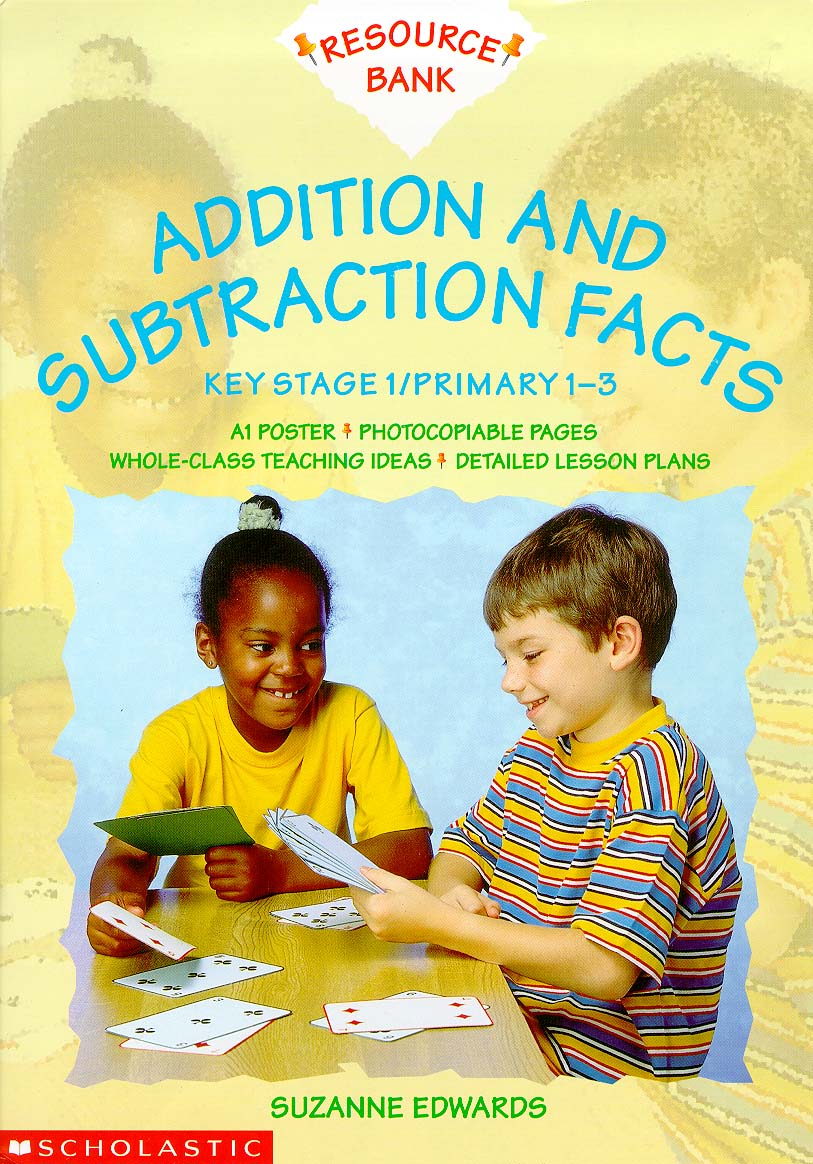
A bank of activities and resources intended to reinforce and develop young children's grasp of number facts and their use for simple, mental calculations. The poster offers photocopiable cards for ones, 10s and 100s...
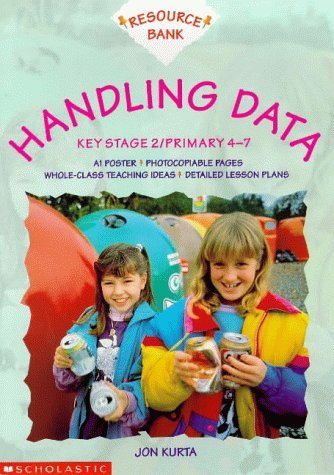
This book focuses on children's experiences of the playground, through a poster, to provide meaningful contexts for collecting and analysing information. This book gives guidance on the processes and skills involved...