
Resources
This item is one of over 25,000 physical resources available from the Resources Collection. The Archive Collection covers over 50 years of curriculum development in the STEM subjects. The Contemporary Collection includes all the latest publications from UK educational publishers.
Radioastronomy
This resource contains 12 lessons, for students aged 8 to 12, that look at radio waves and other invisible forms of light. Lesson 1: Looking at radio telescopes and objects that do and do not use radio waves Lesson 2: Making an antenna dish from paper to amplify your voice Lesson 3: A discussion on X-rays Lesson 4...
Radiographer
Kelly is a radiographer at Addenbrookes hospital. She produces X-rays for doctors to use in the diagnoses. She was a parent at a young age and decided to follow an access course for two evenings a week over two years. She aims to specialise in an area of radiography and progress to becoming a senior member of...
Radiography - Careers
A Catalyst article about careers using radiography in medical procedures. The article looks at a typical working day for a radiographer, the types of radiography used, how to become a radiographer and the qualifications available.
This article is from GCSE Science Review 2006, Volume 16, Issue 3.
...
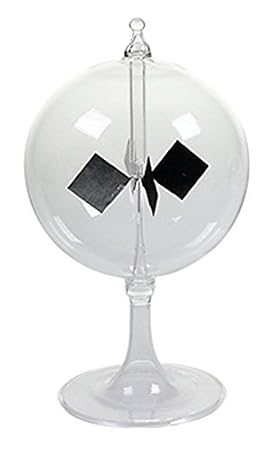
The vanes in the Radiometer are alternately dark and light in colour. When the light strikes these vanes it transfers heat to each one - but not at the same degree. The...
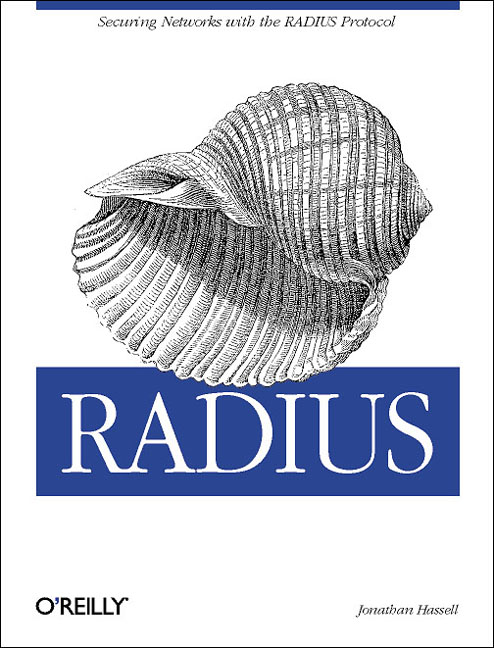
This book covers RADIUS completely, from the history and theory of the architecture around which it was designed, to how the protocol and its ancillaries function on a day-to-day basis, to implementing RADIUS-based...
Radius and Volume of Exoplanets
This activity, from the Royal Observatory Greenwich, uses data from NASA’s Kepler space probe to determine the size of an exoplanet, and provides students with an insight into the advantages and disadvantages of the transit method of exoplanet detection.
...Radius of gyration
In this investigation you roll a cylinder down a slope to see how altering the inclination of the slope affects its speed to calculate the radius the gyration (k) from the given equation. This would fit in well to circular motion.
RAF Code Commanders - cosmic launch project
This activity is a space-themed coding project for learners, combining six to ten hours of STEM linked learning. These lessons use Scratch game creation to explore space and interplanetary missions.
This item is one of over 25,000 physical resources available from the Resources Collection. The Archive Collection covers over 50 years of curriculum development in the STEM subjects. The Contemporary Collection includes all the latest publications from UK educational publishers.