Resources
This collection of resources supports the International Women in Engineering Day, and provides some case studies of women working in engineering roles, and highlights some career opportunities. There are also resources which discuss gender stereotyping in the classroom.
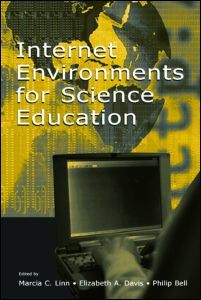
Internet Environments for Science Education synthesizes 25 years of research to identify effective, technology-enhanced ways to convert students into lifelong science learners--one inquiry project at a time.
...
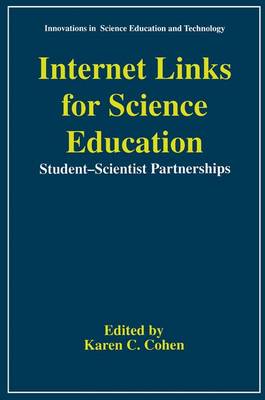
Science teachers come in many varieties, but they share a common goal: to nurture learners. Over the past decade, we have learned a great deal about how to do this effectively. Of all this new (and some not so new)...
Internet of things
Purpose: The internet of things is a growing technology that utilises data collected by devices from across the globe. In a school context, it can be used in school science to compare data from across the world.
Teaching approach: Some investigations require data to be collected over a period of time to...
The Internet of Things:Do-It-Yourself at Home Projects for Arduino, Raspberry Pi, and BeagleBone Black gets you started working with the most popular processing platforms and wireless communication technologies to connect devices and systems to the Internet using sensors. You'll learn the basics of object-oriented...
This item is one of over 25,000 physical resources available from the Resources Collection. The Archive Collection covers over 50 years of curriculum development in the STEM subjects. The Contemporary Collection includes all the latest publications from UK educational publishers.
Interpreting algebraic expressions
This resource develops the concept of interpreting algebraic expressions, translating between words, symbols, tables and area representations.
Students work on tasks that require them to recognise the order of algebraic operations, recognise equivalent expressions, and understand distributive laws of...
Interpreting Algebraic Expressions A1
In this resource from the DfES Standards Unit, students learn to translate between words, symbols, tables, and area representations of algebraic expressions, recognise the order of operations, recognise equivalent expressions and understand the distributive laws of multiplication and division over addition (...
Interpreting and using data: setting taxi fares
This resource develops the concept of using a distance time scatter plot, finding a function that links the variables, and then using the results to decide upon a rate.
The resource is set in the practical context of distances and times a taxi cab takes for 40 journeys. The resulting scatter plot is used to...